
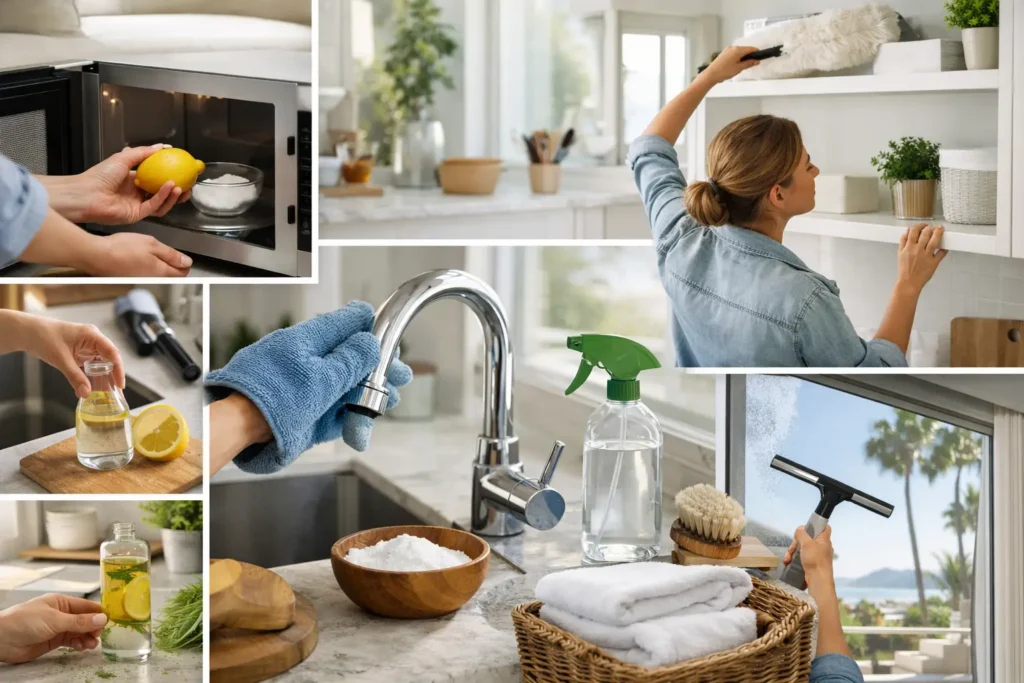
Some messes are not really about dirt. They are about timing. The toothpaste spots on the mirror, crumbs under the toaster, and fingerprints on the fridge tend to show up right when your day is already full. That is why the best life hacks for home cleaning are not flashy tricks. They are simple habits and smarter methods that save time, reduce stress, and help your home stay consistently manageable.
For busy households, the goal is rarely perfection. It is walking into a space that feels under control. A few smart adjustments can make everyday cleaning faster, easier, and much less draining.
Why life hacks for home cleaning work
A useful cleaning hack does one of three things. It cuts down the number of steps, helps prevent buildup before it gets frustrating, or makes it easier to clean as you go. That matters because most people do not struggle with knowing that they should clean. They struggle with fitting it into real life.
The difference between a home that feels calm and one that feels constantly behind often comes down to friction. If supplies are hard to reach, if one task turns into five, or if every room needs a full reset, cleaning starts to feel bigger than it is. Good systems reduce that friction.
There is a trade-off, though. Hacks are not the same as deep cleaning. They are meant to stretch the time between bigger resets and help you stay on top of daily mess. When buildup has already gotten out of hand, a quick trick may help, but it will not replace a thorough clean.
1. Keep cleaning supplies where the mess happens
One of the easiest ways to clean more consistently is to stop storing everything in one central spot. A bathroom cleaner under the sink, a microfiber cloth in the kitchen, and disinfecting wipes where people actually touch surfaces can save more time than you might expect.
This works because it removes the delay. If you have to walk to another room, open a cabinet, and gather supplies just to wipe a counter, that thirty-second task becomes something you put off. When the tools are already nearby, you are much more likely to handle the mess right away.
If you have kids or pets, just make sure anything stored low is safe and secured.
2. Clean in passes, not by perfection
A lot of people get stuck because they start one task and feel like they need to finish the whole room. That is exhausting. A better method is to clean in passes.
In the kitchen, for example, the first pass might be trash and clutter. The second pass is surfaces. The third is floors. In a bathroom, you might first clear counters, then wipe the sink and mirror, then finish with the toilet and floor. This keeps you moving and helps the room improve quickly without requiring an all-or-nothing effort.
It also helps if more than one person is cleaning. Each person can take a pass instead of claiming an entire room.
3. Let products sit before wiping
This is one of the simplest home cleaning tips, and it is often overlooked. If you spray a surface and wipe immediately, you usually end up doing more scrubbing. Letting the product sit for a minute or two gives it time to loosen residue.
You can use that short wait to empty the trash, put items back where they belong, or wipe another surface nearby. Then come back and finish the job with less effort.
The exception is any product with directions that call for immediate removal or a specific dwell time. It always helps to follow the label.
4. Use a dry-to-wet approach
When a room feels dusty, greasy, or generally dull, start dry before you clean wet. Pick up loose debris, dust surfaces, and shake out what you can before introducing sprays or damp cloths.
If you go straight to a wet cloth on dusty surfaces, you can create streaks or smear buildup around. Starting dry gives you a cleaner finish and usually shortens the whole process.
This is especially helpful in kitchens and bathrooms, where fine dust and everyday residue tend to settle together.
5. Give every room a five-minute reset point
One reason clutter builds so fast is that many homes do not have an obvious reset routine. A five-minute reset point changes that. Pick one time that already happens every day, like after dinner or before bed, and use it to return a room to baseline.
That might mean putting shoes away, clearing the coffee table, wiping the bathroom sink, or folding throw blankets. It is not a full clean. It is a short return to order.
This kind of habit works well for families and shared homes because it is realistic. Five minutes feels doable, even on busy days.
6. Fold a microfiber cloth into sections
This sounds small, but it makes a difference. Instead of bunching up a cloth and using the same dirty spot over and over, fold it into halves and then quarters. That gives you multiple clean sections to work with as you move from surface to surface.
The result is better pickup and fewer streaks. It also helps you avoid spreading dust or residue around, which is a common problem when one cloth is doing too much.
For anyone trying to clean faster, this is one of those techniques that improves results without adding any extra effort.
7. Work top to bottom every time
If your cleaning routine ever feels repetitive in the worst way, this may be why. Wiping lower surfaces or floors before dusting shelves, counters, or fixtures means you are often cleaning the same area twice.
A top-to-bottom pattern is more efficient because gravity does part of the work. Dust and debris fall downward, so it makes sense to finish with the lowest surfaces and floors. It is not a glamorous hack, but it consistently saves time.
The bigger the room, the more this matters.
8. Put a catch-all bin where clutter collects
Every home has a drop zone, whether it was planned that way or not. It might be the kitchen counter, the entry table, or one corner of the living room. Instead of fighting that habit every day, work with it.
Place a small bin or basket in the area where items naturally gather. Mail, chargers, sunglasses, and random daily carry-ins can go there instead of spreading across surfaces. Once the clutter is contained, the room looks cleaner even before you put everything away.
This is not about hiding mess forever. It is about controlling visual clutter so your space feels calmer between bigger resets.
9. Pair cleaning tasks with something you already do
The most reliable routines are tied to existing habits. Wipe the bathroom counter after brushing your teeth. Clear the kitchen sink while coffee brews. Do a quick mirror check after your shower. Small actions attached to routines are easier to maintain than separate cleaning goals.
This approach works especially well for people with packed schedules because it does not require carving out extra time. You are simply using moments that already exist.
If a habit does not stick right away, that is normal. The best cleaning system is the one you will actually repeat.
10. Know when speed helps and when it hurts
Fast cleaning has its place. A quick reset before guests arrive or a ten-minute pickup before work can absolutely help your home feel better. But speed is not always the answer.
Some spaces need slower attention, especially areas that collect more buildup from daily use. If you rush through every task, you may end up redoing them sooner. The better mindset is efficient, not frantic.
That is often where people benefit from a mix of habits and support. Daily upkeep handles the visible mess. A professional cleaning service handles the more detailed work that is harder to squeeze into a busy week.
11. Use life hacks for home cleaning to maintain, not chase
The most effective cleaning mindset is not chasing every mess the second it appears. It is creating enough structure that your home stays within reach. That might mean quick resets during the week and a more thorough clean on a regular schedule.
For households in Ventura and Santa Barbara County, that balance can make a real difference. When your home has a reliable baseline, cleaning stops feeling like a constant catch-up project and starts feeling manageable again.
At Glowy Life Co., we see this all the time. People do not usually need more complicated advice. They need practical systems, dependable support, and a home that feels clean without adding more stress to the week.
When hacks are enough and when they are not
Cleaning hacks are best for maintenance. They help with everyday buildup, busy schedules, and keeping your space presentable between deeper cleanings. They are especially useful if your main challenge is staying consistent.
But if your home has gone a while without a full reset, or if you are preparing for a move, hosting, or managing a rental turnover, shortcuts can only do so much. There is no shame in that. Sometimes the smartest move is not finding a better trick. It is getting reliable help and protecting your time.
A clean home should feel like relief, not another unfinished task hanging over your weekend. Start with one or two changes that remove friction, and let that be enough to make the next week feel lighter.